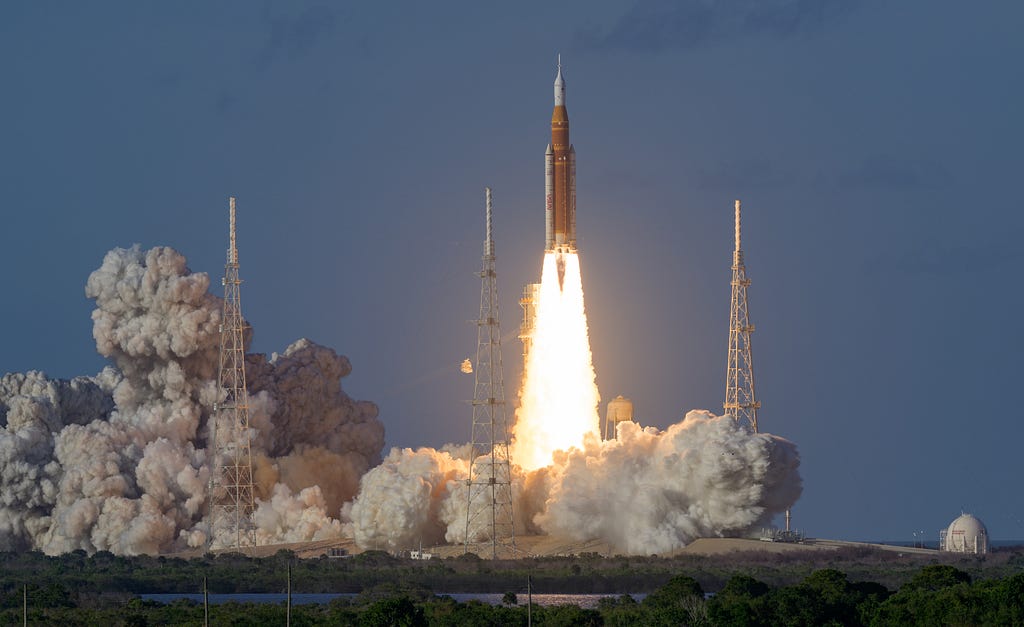
In December 1972, Apollo 17 Commander Gene Cernan left the last human footprints on the lunar dust, marking the end of a brief but intense era of exploration. Since that departure, human spaceflight has been strictly confined to low Earth orbit.
This orbital neighborhood is relatively close to our planet, hovering roughly 250 miles above the surface. It is the region where we flew the Space Shuttle and where outposts like the International Space Station currently operate.
For over half a century, no human has ventured beyond this immediate protective boundary. While the Moon sits nearly 240,000 miles away, we have spent decades mastering life in the shallows of space. The deep ocean of the solar system has remained untouched by human presence.
Artemis II is the mission designed to finally break this holding pattern. It represents humanity’s imminent return to deep space navigation. However, it is vital to understand what this mission is not: it does not land on the lunar surface.
Before humanity can return to the Moon, it must first prove it can safely leave Earth orbit again.
The transition from the Apollo era to the current Artemis program represents a fundamental shift in philosophy. Apollo was a space race sprint driven by Cold War geopolitical competition, resulting in brief, localized lunar stays that lasted only a few days at most.
Artemis aims for something entirely different. The program is designed to establish a sustainable lunar presence, targeting the resource-rich lunar South Pole for a future base camp. It also aims to build long-term orbital infrastructure, specifically the Lunar Gateway space station, to ultimately serve as a stepping stone for human missions to Mars.
To achieve these ambitious, multi-decade goals, engineers strictly distinguish between an exploration mission and a validation mission. An exploration mission focuses on scientific discovery, deploying rovers, and achieving new surface milestones like collecting deep-core lunar samples.
Artemis II is strictly a validation mission. It exists solely to test the hardware, software, and human systems in the unforgiving deep-space environment before committing to complex maneuvers like lunar landings. Artemis is not about reaching the Moon once. It is about building the capability to return repeatedly and safely.
Fulfilling that purpose requires a highly specific flight plan. At its core, Artemis II is defined as a crewed lunar flyby mission. In simple terms, the spacecraft will travel to the Moon, loop around it, and return directly to Earth.
Technically, this means following a gravity-influenced trajectory where the Moon’s mass bends the flight path. The spacecraft will sweep around the lunar far side, reaching nearly 4,600 miles beyond the Moon — the furthest humans have ever traveled into deep space.
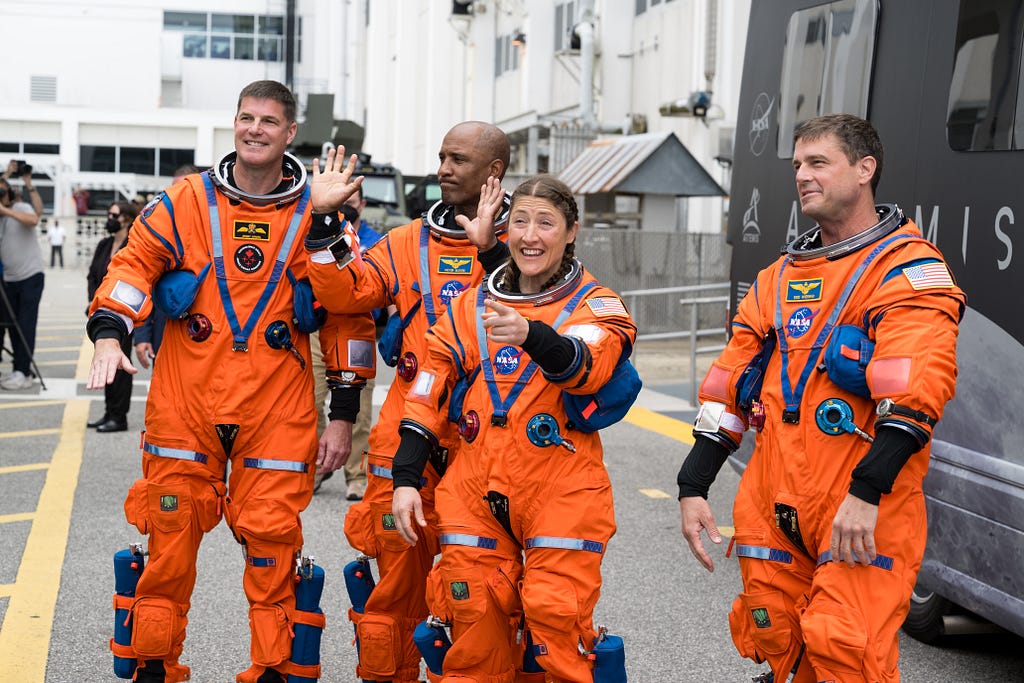
The journey will last approximately ten days and carry a crew of four. The team is led by NASA astronauts Commander Reid Wiseman and Pilot Victor Glover, who will oversee the critical navigation and trajectory burns.
They are joined by Mission Specialist Christina Hammock Koch of NASA and Mission Specialist Jeremy Hansen of the Canadian Space Agency (CSA). This specific roster highlights the program’s commitment to international collaboration and operational diversity.
To accomplish this transit, the mission relies on two distinct primary systems. The first is the Space Launch System (SLS), a heavy-lift rocket generating over 8.8 million pounds of thrust.
The SLS is responsible for providing the immense escape velocity needed to push a payload out of Earth’s gravity well. Its massive core stage and twin solid rocket boosters do the heavy lifting through the atmosphere.
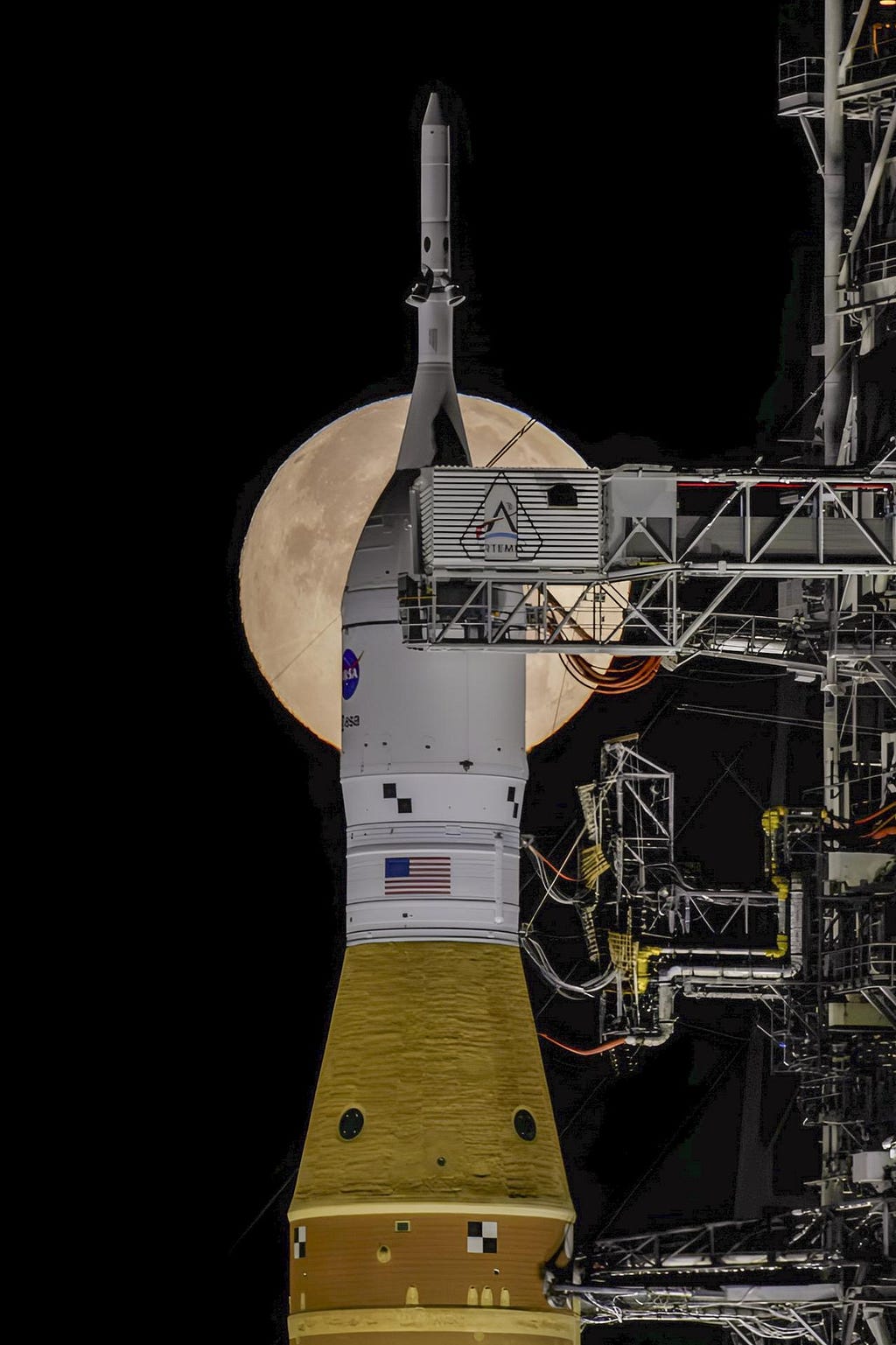
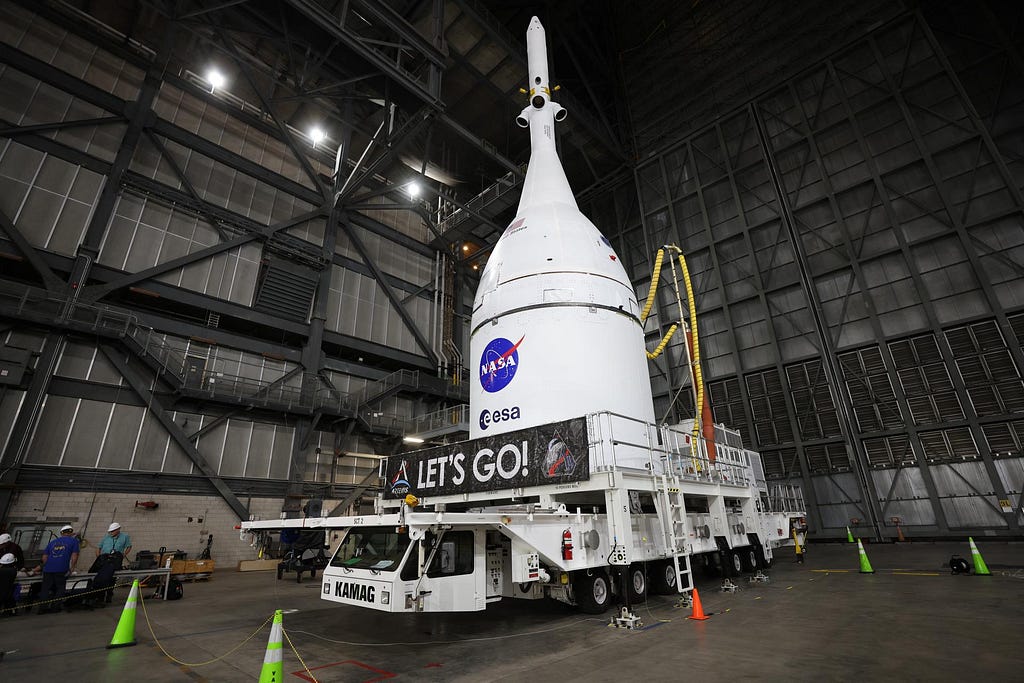
The second system is the Orion spacecraft, which serves as the crew capsule. It provides transport, vital life support, and the thermal protection required for re-entry.
Crucially, Orion does not fly alone. It is physically integrated with the European Service Module (ESM), provided by the European Space Agency. The ESM supplies the spacecraft’s primary propulsion, electrical power, water, and oxygen during the deep-space transit.
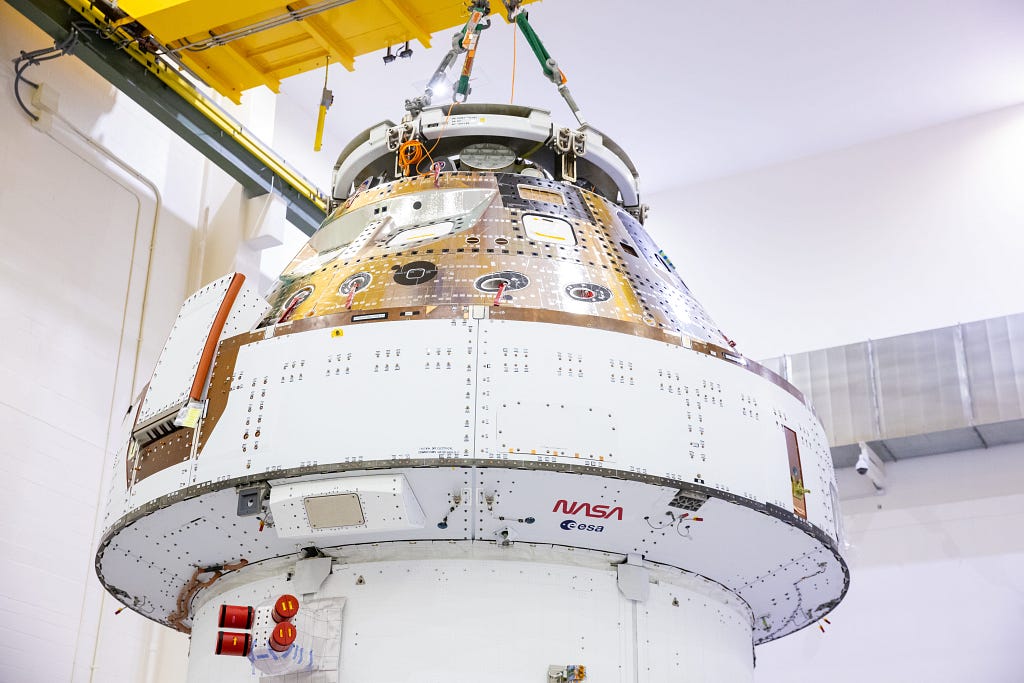
These systems interact sequentially. The SLS launches the vehicle, and its upper stage gives the final push toward the Moon before separating. From that point on, the Orion-ESM stack handles the entirety of the mission as a standalone deep-space validation platform.
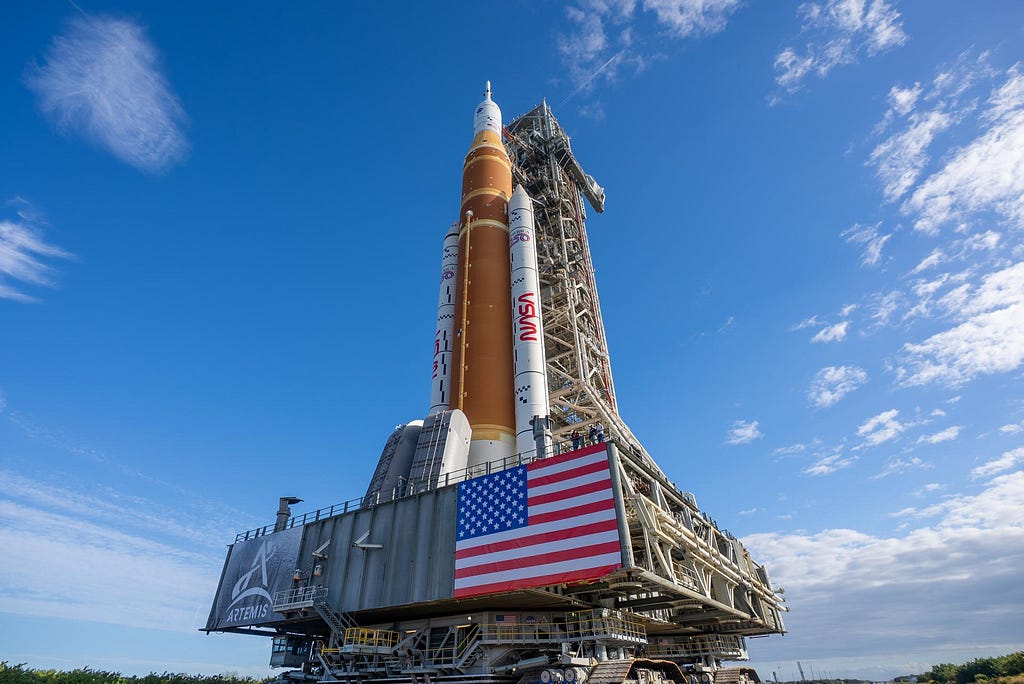
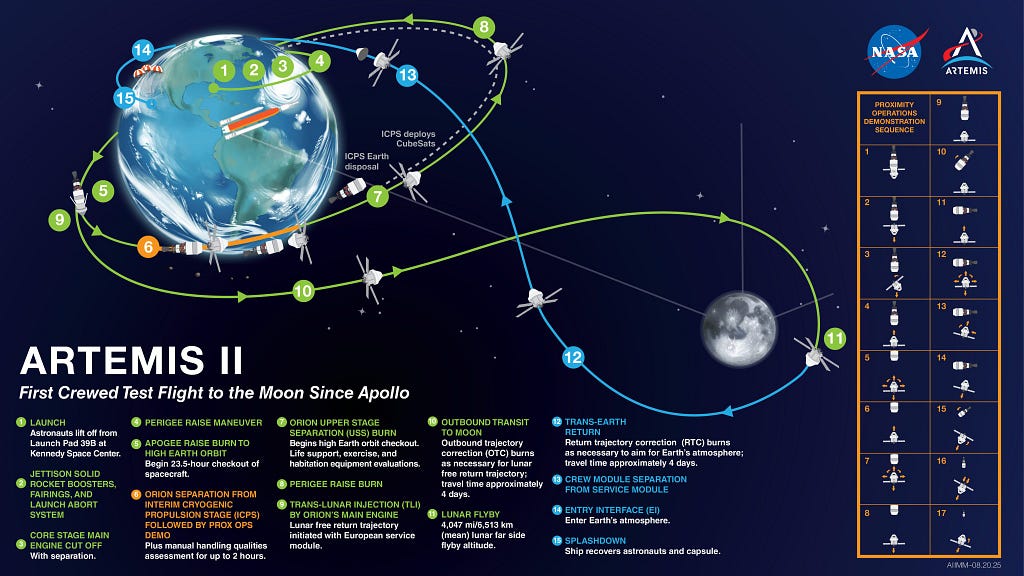
Now let’s follow the mission step by step. The journey begins with the launch and ascent, where the massive SLS rocket burns millions of pounds of propellant to escape Earth’s gravity. This raw power is necessary just to reach space.
Once in space, the spacecraft enters a highly elliptical Earth orbit. The crew will spend roughly 24 hours in this phase, testing life support, spacesuits, and manual flying controls while still close enough to Earth to return quickly if an anomaly occurs.
During this period, the crew will perform proximity operations, or “Prox Ops.” Commander Wiseman and Pilot Glover will manually fly the Orion capsule around the spent upper rocket stage. This serves as a critical practice run for the precise docking maneuvers required on future lunar landing missions.
Following these checks is the Trans-Lunar Injection (TLI). The rocket’s upper stage fires one last time, significantly increasing velocity to propel the spacecraft toward the Moon. The challenge here is precision; a slight error in burn duration drastically alters the trajectory.
Next is the cruise phase. During this multi-day transit, the crew relies entirely on Orion’s navigation systems and shielding to survive the deep-space radiation environment.
The spacecraft then performs the lunar flyby, reaching roughly 4,000 to 6,000 miles past the lunar far side. Here, the combined gravity of the Earth and the Moon acts like a slingshot. This free-return trajectory naturally whips the spacecraft back onto a direct course for Earth without requiring another major engine burn.
This leads into the return journey, a largely passive transit where the spacecraft coasts back. The primary challenge here is maintaining system health during the long coast through the void.
The most violent phase is re-entry. Just before reaching Earth, the crew capsule detaches from the service module. It then slams into the atmosphere at 11 kilometers per second (about 24,500 mph), generating a plasma field around the spacecraft that reaches nearly 3,000 degrees Fahrenheit. The heat shield must survive this inferno to safely decelerate the vehicle.
Finally, the mission concludes with a splashdown. Once the atmosphere slows the capsule, a complex sequence of parachutes deploys. The spacecraft will land in the Pacific Ocean off the coast of San Diego, where U.S. Navy teams will recover the crew and complete the validation cycle.
To fully grasp how engineers validate this mission, we must look closer at the core physics and systems of the flight. While modern spacecraft are highly automated, sending humans is a calculated engineering requirement. The astronauts are active components of the testing process.
The free-return trajectory mentioned earlier is fundamentally a fail-safe design. By aiming slightly ahead of the Moon, the spacecraft uses lunar gravity to bend its path back to Earth. If Orion’s main engine completely fails, the physics of the trajectory ensure the crew will coast safely home.
Navigating this path requires a robust Guidance, Navigation, and Control (GNC) system. Orion relies on star trackers and a specialized Optical Navigation System (OpNav). This camera continuously photographs the Earth and Moon, calculating their apparent sizes to determine the spacecraft’s precise coordinates in the void.
However, the crew provides a crucial manual override capability. If automated systems encounter an anomaly, human pilots can immediately assess the situation, take control, and manually sight stars using optical tools to update the navigation computers.
Inside the cabin, the Environmental Control and Life Support System (ECLSS) operates as a closed-loop environment. Orion’s ECLSS utilizes advanced amine swingbed technology to continuously scrub carbon dioxide from the air, eliminating the need for the heavy, consumable filters used during Apollo.
Engineers need to validate this system under the stress of actual human habitation. Simulators on Earth cannot perfectly replicate the unpredictable levels of moisture, heat, and carbon dioxide produced by a living, exercising crew over ten days.
Furthermore, the crew will actively monitor the deep-space radiation environment. Unlike low Earth orbit, this flight passes completely through the Van Allen radiation belts and out into the unprotected solar wind, where high-energy particles pose a severe threat.
Astronauts will test the effectiveness of Orion’s radiation shielding, including a specialized storm shelter. In the event of a solar flare, the crew will use dense stowage bags and materials beneath the main floor to physically construct this shelter, validating its protective capabilities.
The return journey relies heavily on complex re-entry physics. To reduce extreme G-forces on the crew, Orion will perform a unique “skip re-entry” maneuver, dipping into the upper atmosphere to bleed off speed, skipping back out briefly, and then making its final descent.
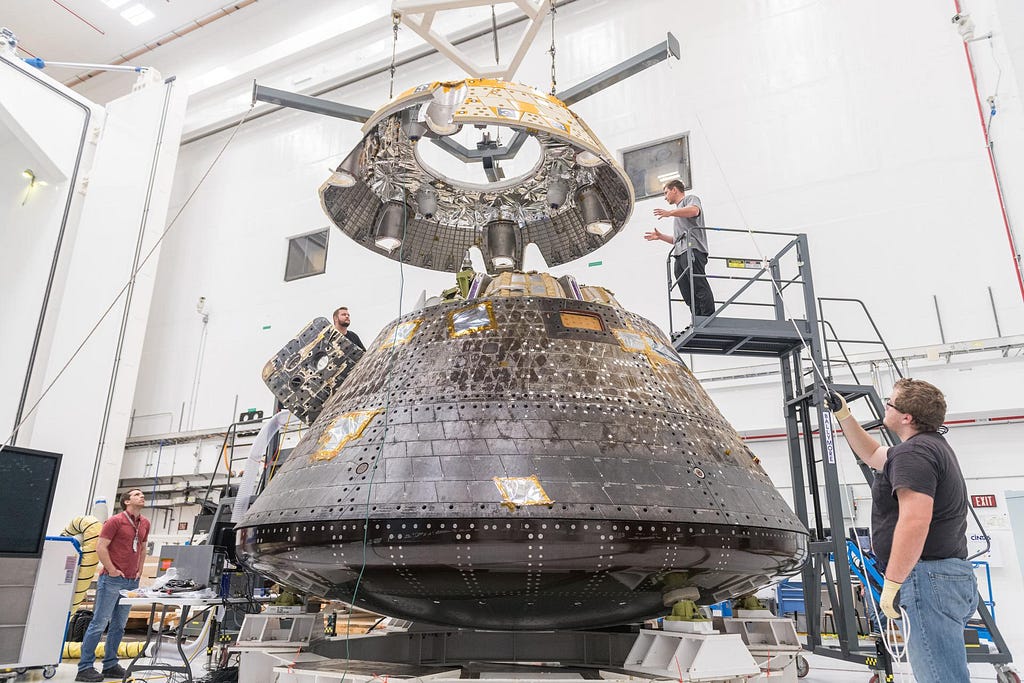
During this final plunge, the spacecraft hits the atmosphere at roughly 11 kilometers per second. Orion’s thermal protection system uses an ablative material called AVCOAT that slowly burns away, safely carrying the immense heat away from the cabin.
Ultimately, human adaptability combined with these core engineering systems forms the final, essential layer of mission validation.
Understanding the crew’s role clarifies why this specific mission does not attempt a landing. The primary reason is architectural: the Orion spacecraft is designed strictly as a deep-space transport vehicle.
Orion is built to survive a fiery 11-kilometer-per-second atmospheric re-entry. That requires a massive heat shield, parachutes, and a heavy reinforced structure. Carrying all that Earth-return hardware down to the lunar surface and back up again would require an impossible amount of fuel.
Therefore, Orion stays in orbit. Landing requires an entirely separate, highly specialized vehicle optimized only for the vacuum of space. For future missions, NASA has contracted SpaceX to develop the Starship Human Landing System (HLS) to perform this exact task.
Unlike the Apollo missions, which launched both the transit capsule and the small lunar module on a single Saturn V rocket, Artemis utilizes a distributed architecture.
The Starship HLS is massive — roughly the size of a 15-story building. Because it requires so much cryogenic propellant for a lunar descent, it must be launched separately and refueled in Earth orbit by a fleet of tanker ships before it can even head to the Moon.
Once fully fueled, the HLS will fly to lunar orbit and wait in the vacuum. Only then will Orion launch from Earth with the crew to rendezvous, dock, and transfer the astronauts for the final surface descent.
The engineering reasoning behind keeping these systems separate right now is fundamental risk management. Combining the first deep-space crewed transit, a complex orbital refueling sequence, and a lunar landing into a single test flight compounds the likelihood of failure exponentially.
By dividing the program into distinct phases, engineers isolate variables. Artemis II focuses entirely on ensuring the Orion “taxi” works safely and can keep the crew alive.
Once Orion’s life support, navigation, and Earth re-entry systems are fully validated on this flight, Artemis III can focus on the next major variable: the landing itself. In aerospace engineering, this type of incremental testing is the most reliable way to reduce catastrophic risk.
This intense focus on system reliability highlights the stark differences between Artemis and Apollo. Apollo operated under the immense pressure of a Cold War deadline, prioritizing speed and geopolitical competition over long-term sustainability. The primary objective was a safe arrival and return before the end of the 1960s.
Because of that intense schedule pressure, the Apollo architecture was relatively simple and highly expendable. It relied heavily on single-use components, from the towering Saturn V rocket to the lunar module that was discarded to crash back onto the Moon. The program accepted a much higher level of risk, operating with minimal redundancy and single-point-of-failure systems, to meet its aggressive timeline.
The Artemis architecture, by contrast, is vastly more complex and distributed. Instead of a purely domestic, government-built vehicle system, Artemis relies on a global coalition. It integrates critical hardware from international partners, such as the European Service Module powering Orion, and leans heavily on commercial companies like SpaceX and Blue Origin for transport and lunar landings.
Furthermore, Artemis systems are designed for reusability and longevity. Where Apollo left disposable descent stages behind, Artemis is building an architecture meant to last for decades, laying the groundwork for a permanent orbiting space station and a long-term lunar base.
Because it is building this permanent, multi-national infrastructure with a significantly lower tolerance for catastrophic risk, Artemis is naturally slower to develop. Building an open-ended architecture for endurance simply takes more time than building a disposable rocket for a sprint.
This complexity is directly reflected in the economics of the program. The total NASA budget is roughly $25 billion per year, representing less than half of one percent of the federal budget. Yet, the broader Artemis program is estimated to cost well over $93 billion, with a single SLS launch alone costing upward of $4 billion.
These numbers often seem staggering, but they are a direct result of the extreme operating environment. Space is expensive because physics is unforgiving, and overcoming Earth’s gravity is incredibly inefficient. Every single pound of payload requires hundreds of pounds of fuel just to reach orbit.
Because of this brutal weight penalty, engineers cannot use standard industrial materials. Spacecraft components must be custom-machined from exotic, lightweight alloys and advanced carbon composites, driving manufacturing costs exponentially higher.
Furthermore, developing systems that can survive the vacuum, radiation, and massive thermal swings of deep space requires years of rigorous testing. Before a component ever flies, it spends months in cryogenic vacuum chambers and acoustic simulators to ensure it won’t shake apart during launch.
Once in flight, every critical system must have redundancy. In human spaceflight, this often means “dissimilar redundancy” — using completely different hardware and software for the backup computers so a single programming bug cannot crash the entire ship.
You cannot pull over to the side of the road on the way to the Moon to fix a broken part. In space engineering, cost is entirely driven by this relentless pursuit of reliability.
That investment in reliability is why this specific flight is the linchpin of the entire lunar program. Artemis II provides the critical deep-space validation necessary for the increasingly complex missions that follow.
Following a recent program overhaul, the roadmap to the Moon has shifted from a sprint to a deliberate, step-by-step marathon. Instead of rushing straight to a lunar landing, Artemis III will now act as an intermediate test.
During Artemis III, astronauts will practice docking the Orion capsule with massive commercial landers — like SpaceX’s Starship — in the safety of low Earth orbit. This ensures the hardware works perfectly before attempting the same maneuver a quarter-million miles away.
Once that orbital docking is proven, Artemis IV is slated to finally put boots back on the lunar dust near the Moon’s South Pole. But a single landing is no longer the ultimate goal.
NASA has recently paused plans for a lunar orbiting space station, choosing instead to invest heavily in a permanent lunar surface base. Future missions will rely on a growing network of pressurized surface habitats, long-range rovers, and cutting-edge nuclear power systems like Space Reactor One (SR-1).
None of this multi-billion-dollar infrastructure can be built without a proven, reliable method of transporting human crews from Earth to the lunar environment and back.
Without the core system validation provided by Artemis II, the entire chain of future exploration falls apart. Simply put, building a permanent home on the Moon begins with proving we can safely survive the commute.
Ultimately, this mission represents the quiet, necessary groundwork of exploration. It is the bridge between the orbital achievements of the past few decades and the interplanetary ambitions of the future.
By testing the rocket, the capsule, and the crew in the deep-space environment, NASA is ensuring that the hardware is as robust as the vision it supports. It is a strict capability validation exercise.
Artemis II is not a mission to reach the Moon. It is a mission to prove that reaching the Moon is possible again.